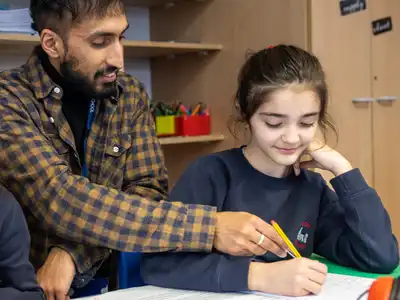
The jump from primary to secondary school is a milestone for every pupil. New subjects, new teachers and fresh opportunities to develop writing skills lie ahead.
Yet, for some – especially those who find writing difficult – this transition can feel daunting. This article explores how you can support pupils as they transition to secondary school and offers practical strategies for identifying and helping those who struggle with writing.
Why the move matters for writing
The Department for Education’s writing framework recognises that the transition from primary to secondary school is an important step in pupils’ writing development. As pupils move from Key Stage 2 to Key Stage 3, they experience a significant change in how they use writing across different subjects (Zeedyk, 2003). In primary school, pupils often learn in the same classroom with one teacher who knows their strengths and areas for development across multiple subject areas. When pupils arrive in secondary school, everything shifts. Pupils move between different subjects, each with its own specialist teacher and expectations for writing.
Suddenly, pupils are asked to write up experiments in science, analyse sources in history, or explain ideas in geography. They must adapt their writing for different audiences, purposes and formats. The complexity increases, too – secondary writing often involves making comparisons, constructing arguments and using subject-specific terminology.
For pupils who found writing challenging in primary school, these new demands can feel overwhelming. Even confident writers may need support as they learn to switch between different styles and expectations. Without clear guidance and consistent routines, some pupils may lose confidence or struggle to keep up.
Recognising these challenges is the first step. By working together across schools and subjects and keeping writing support at the heart of every lesson, teachers can help pupils build on their existing skills, adapt to new expectations and grow as effective communicators in every area of the curriculum (EEF, 2022).
How to make transition smoother
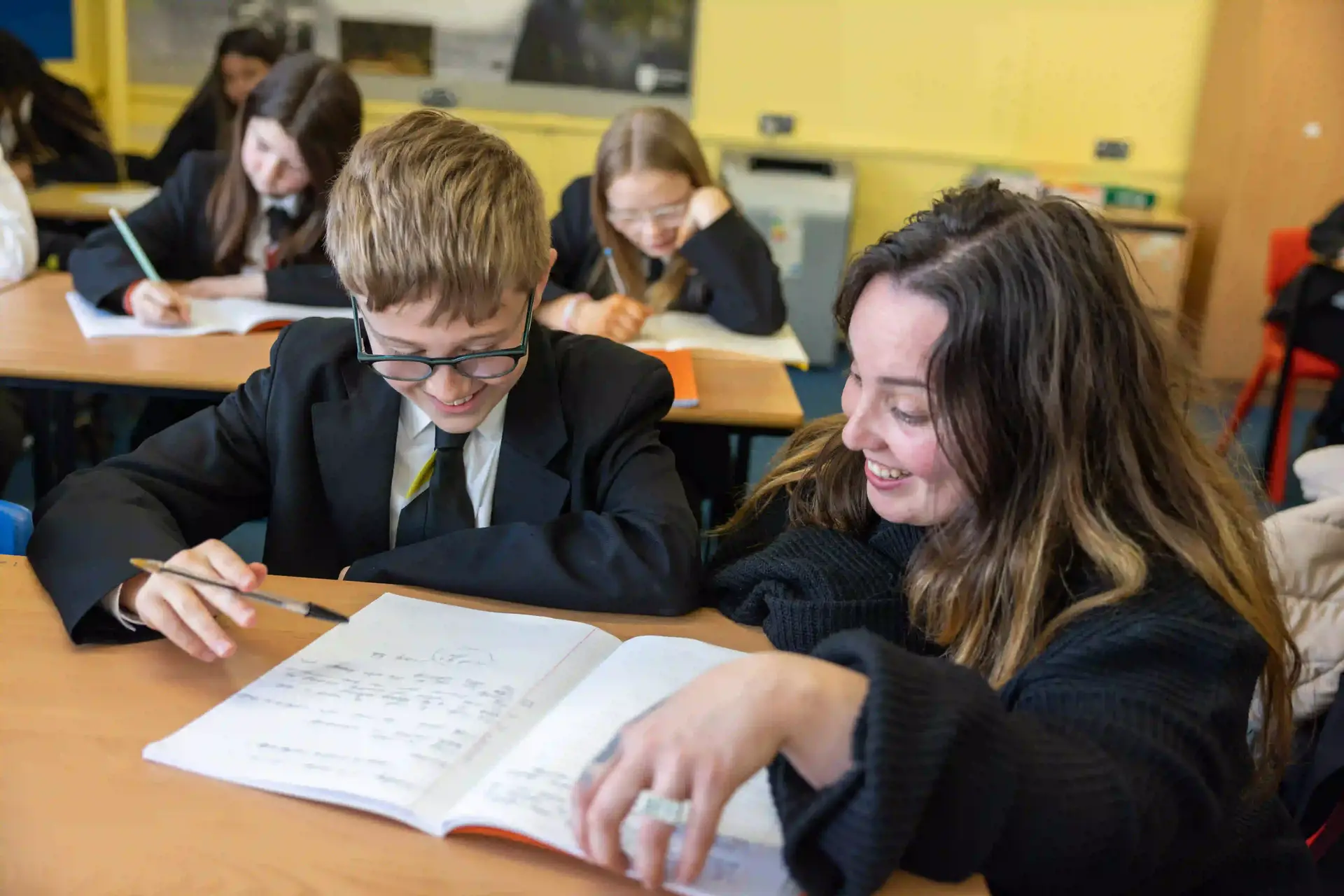
You can help pupils settle in by strengthening links between primary and secondary schools (Scottish Government, 2019). Sharing information about what pupils have learned and where they might need extra help means everyone knows what to expect. As a secondary teacher, it’s important to understand what’s been covered in the primary English curriculum and what pupils should be able to do by the end of Year 6. This way, you can build on existing skills, rather than starting from scratch or missing key areas.
Pupils arrive with different experiences and strengths. Some will be confident writers, ready for longer pieces and new styles. Others may need support with basics like handwriting, spelling or organising their ideas. By sharing approaches and routines, you can make sure every pupil gets the help they need from day one – whether that means building on what’s familiar, revisiting key skills or providing extra practice.
One of the most important things for secondary teachers is to understand the components of writing, how these can be barriers, and how to overcome them. When you recognise the building blocks of writing and the challenges pupils may face, you can plan effective support and create opportunities for every pupil to succeed.
When pupils know their teachers understand where they’re coming from, it boosts their confidence and helps them settle in. Ongoing conversations between primary and secondary teachers help every child feel ready for the next step and excited about what’s ahead (Green, 1997; Jindale-Snape, 2008).
Reflection prompts:
- How does your school support pupils’ transition from Key Stage 2 to Key Stage 3?
- In what ways do secondary teachers stay informed about the writing skills pupils bring from primary school?
Action steps:
- Set up regular meetings or information-sharing between primary and secondary teachers, so everyone understands what pupils have covered, where they might need extra support, and which routines or strategies work best.
- Make sure your teachers are familiar with primary writing expectations, so they can build on what pupils already know and don’t repeat content unnecessarily.
How to support struggling writers
Great teaching in every subject helps most of your pupils develop strong literacy skills. When your lessons are clear, engaging and give pupils plenty of chances to practise writing, most will make good progress. But even with the best teaching, some pupils need a bit more help.
It’s important to notice different writing needs and build support into everyday classroom practice – not just as an add-on for a few. Handwriting practice, spelling routines and opportunities for oral rehearsal should be part of your universal offer. This way, all pupils benefit and you’re less likely to miss someone who needs extra help. When support is part of your classroom culture, it feels normal and accessible for everyone.
Some pupils will still need targeted interventions, such as small group sessions or extra practice with specific skills. The key is to spot these needs early – whether it’s a pupil who’s reluctant to start, struggles to organise their thoughts or lacks confidence – and respond quickly. Early support can prevent small problems from growing and helps pupils keep up with their classmates (EEF, 2018).
When considering an intervention, it’s important to have clear information about each pupil’s specific needs. This helps you choose an approach that is well matched and likely to be effective (Murphy, 2019).
By making support for writing a natural part of every lesson and stepping in with extra help when needed, you give every pupil the chance to succeed. It’s about making writing feel achievable, building confidence and helping pupils see themselves as capable writers – whatever the subject.
Strategies for support:
- Small group tuition: Group pupils with similar literacy challenges together for targeted support.
- One-to-one tuition: If small group tuition is ineffective, consider one-to-one support.
- Regular assessment: Conduct assessments to identify pupils’ specific needs and evaluate the effectiveness of interventions.
Reflection prompts:
- How does your school identify and support struggling writers?
- How do you use regular assessments to inform and provide targeted interventions for pupils?
Action steps:
- Keep an eye out for pupils who seem reluctant, write slowly, or struggle to organise their ideas, and note these observations for follow-up.
- Adapt teaching to meet different needs by being flexible in your approach – give extra time or practice to pupils who need. If a pupil needs more help, put targeted focused interventions in place quickly.
This explainer is part of a series for teachers and school leaders on how to navigate the writing framework. Explore the other articles.
References
- Education Endowment Foundation (2018) Improving Literacy in Secondary Schools
- Education Endowment Foundation (2019). ‘Transition toolkit: Supporting pupils to make a successful move to secondary school’.
- Green, P. (1997). Moving from the world of the known to the unknown: The transition from primary to secondary school. Melbourne Studies in Education, 38(2), 67–83.
- Jindal-Snape, D. & Miller, D. (2008). A challenge of living? Understanding the psycho-social processes of the child during primary-secondary transition through resilience and self-esteem theories. Educational Psychology Review, 20(3), 217–236.
- Murphy, D (2019). ‘Effective Literacy Intervention at Secondary School. In: T. Bennett (ed.) The researchED guide to literacy: An evidence-informed guide for teachers. Woodbridge: John Catt, pp. 117–130.
- Scottish Government (2022). ‘Primary-secondary transitions: Systematic literature review’.
- Zeedyk, M. S., Gallacher, J., Henderson, M., Hope, G., Husband, B. and Lindsay, K. (2003) 'Negotiating the transition from primary to secondary school: perceptions of pupils, parents and teachers', Psychology International, 24(1), pp. 67–79.