Think back to the last time you asked your class to write something. Did you spot a few pupils staring at the page, unsure where to start?
Maybe you noticed someone who always writes with confidence, while others struggle to get going. What’s happening here isn’t just about grammar or spelling – it’s about whether your pupils see themselves as writers. This article explores why writer identity matters, how it shapes pupils’ engagement, and what you can do to help every child see themselves as a writer.
Why does writer identity matter?
Writing, like other forms of language, is a powerful force that shapes how children see themselves and their world (Richardson & St. Pierre, 2005). When pupils believe they have something worth saying, writing suddenly feels different. It’s not just a task to finish, but a way to share who they are and what matters to them. And that sense of identity as a writer can change everything about how they approach composition.
You can spot signs of pupils lacking a writer identity in the classroom. Some pupils are hesitant to put pen to paper saying, “I don’t know what to write,”. Others might rush through the task just to get it done, with little care for what their words mean. For these pupils, writing feels like something they must do, not something they want to do.
This lack of identity isn’t just about confidence – it affects the whole process of composition. Pupils who don’t see themselves as writers often struggle to develop ideas, organise their thoughts and communicate clearly. They’re less likely to experiment with language or structure, and more likely to stick rigidly to templates or formulaic responses.
The teacher’s role in shaping writing identity
Many pupils lack a positive self-concept as writers, which makes it harder for them to get started and stay motivated.
If you want your pupils to write with confidence, helping them develop a writer identity is key.
This means making sure they know their ideas and stories are valuable, and that their voice deserves to be heard. When pupils see themselves as writers, they take more risks, experiment with language, and persevere. Seeing writing as self-expression, not just rules, leads to more creative and meaningful work (Seban & Tavsanli, 2015; Graham et al., 2017; Cremin et al., 2023).
The way children think about reading and writing – and how they see themselves in relation to these activities – is shaped by their sense of identity (Kauffman, 2006). If a child believes they are capable of reading and writing and sees these skills as part of who they are, they are more likely to engage confidently and enthusiastically with literacy tasks.
This sense of identity as is not fixed – it develops over time. The literacy practices you use in the classroom are the most influential factor in shaping pupils’ literacy learning and identity (Smith, 2008; Martens & Adamson, 2001). Every writing event can help reconstruct and develop pupils’ sense of themselves as writers (Bourne, 2002; Compton-Lilly, 2006).
The more you focus on building their identity as writers, the more you’ll see them grow – not just as learners, but as people. And the need has never been greater. Just one in four pupils say they enjoy writing in their free time, and just one in ten write daily – the lowest rates in 15 years (National Literacy Trust, 2025).
Reflection prompts:
- How do your pupils currently see themselves as writers? What evidence have you noticed in their attitudes, behaviour or work?
- Which pupils seem most reluctant to write, and what might be influencing their self-concept as writers?
Action steps:
- Regularly discuss pupils’ writing attitudes and progress with colleagues.
Share insights about which pupils are reluctant writers and what strategies help build their confidence. Use these conversations to review classroom approaches, celebrate progress, and identify barriers together. - Create space for pupils to talk about their writing experiences and choices.
Use their feedback to shape writing activities and provide support that meets their needs.
How writer identity strengthens composition
When you help children see themselves as writers, you’re giving them permission to use writing as a tool for thinking, exploring and expressing. They start to see writing as a way to make sense of their experiences, ask questions, and share their opinions. This shift has real benefits for composition:
- Ideas flow more freely: Pupils are willing to take risks and try out new ideas, rather than worrying about getting everything ‘right’.
- Organisation improves: When children care about what they’re writing, they think more about how to structure their work, so it makes sense to others.
- Language becomes richer: Pupils experiment with vocabulary, sentence structure and style, making their writing more engaging.
- Editing feels purposeful: Instead of seeing feedback as criticism, children use it to make their writing clearer and stronger.
- Writing is more coherent: Because they know what they want to say, pupils are better at connecting ideas and maintaining a clear thread throughout their work.
Pupils’ growth as writers is shaped by the curriculum, school policies and the approaches you use (Freedman, 1994a). The context of your classroom and the learning environment set the benchmark for how pupils develop their literacy identity (Johnston, Woodside-Jiron & Day, 2001). Your interactions with pupils, and your own beliefs about literacy, directly influence how they view themselves as writers (Martens & Adamson, 2001; Johnston et al., 2001).
Children’s intellectual identity and their unique ways of thinking can have a real impact on their writing performance (Dutro, Kazemi & Balf, 2006). Your expectations, and the feedback you offer, shape how pupils see themselves as writers (Bourne, 2002).
Practical ways to help children see themselves as writers
When children see themselves as writers, they approach composition in a whole new way. They write to explore ideas, share feelings and connect with others. Their work becomes more imaginative and coherent because they care about what they’re saying, not just how it’s written.
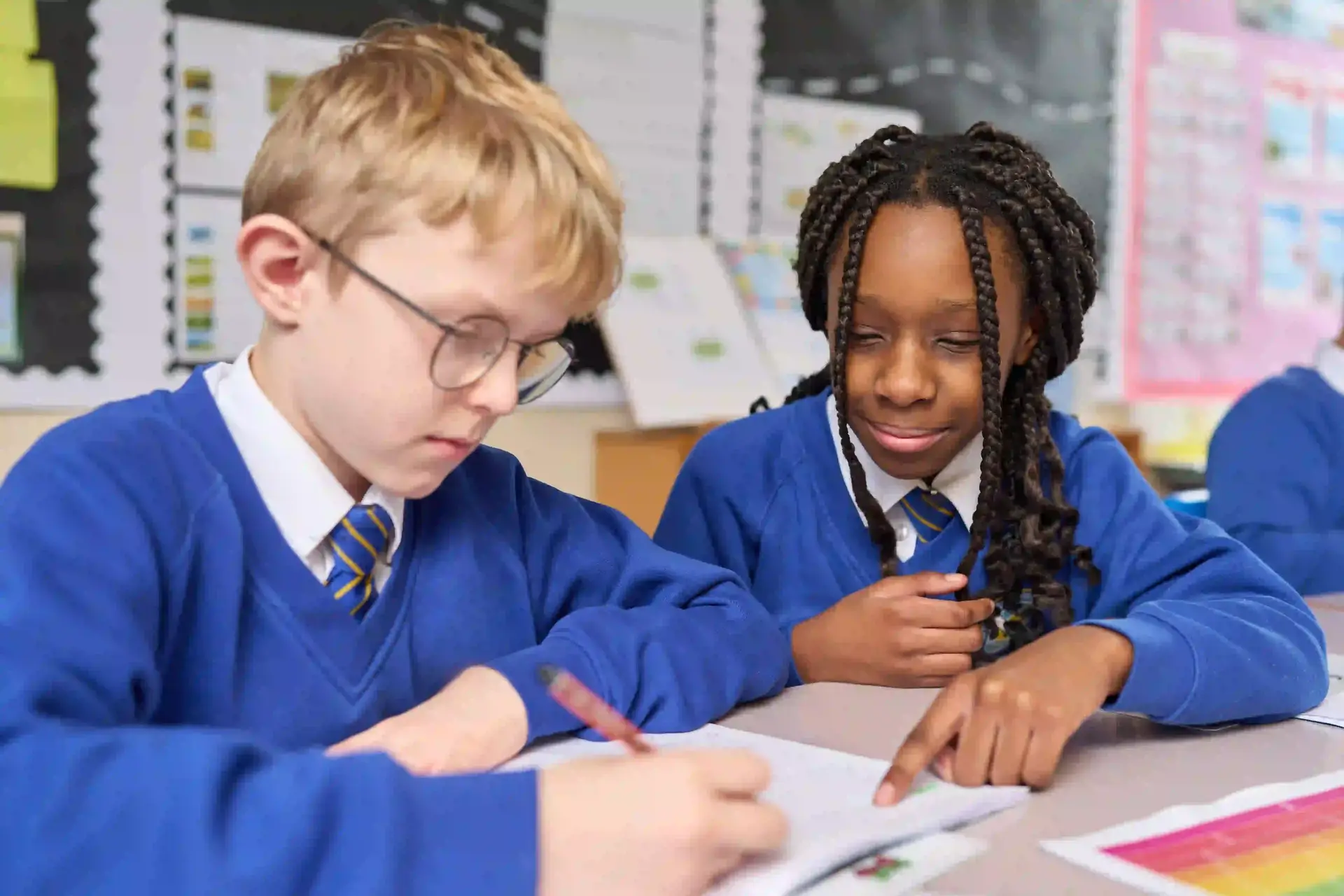
Writing is not just a solo activity. Working with peers can help children find their voice and feel part of a community of writers. Collaborative projects, peer feedback, and group storytelling foster connection and creativity. While social motivations may not drive every child, for those who enjoy writing, sharing with others can deepen the experience (National Literacy Trust, 2025).
You play a vital role in shaping how children view themselves as writers. Small changes to your classroom practice can make a significant difference to pupils’ confidence, motivation and sense of belonging as writers.
- Share lots of different types of writing: Show your pupils everything from stories and comics to recipes, blogs and song lyrics. Let them see that writing isn’t just about essays – there’s a place for everyone’s voice. If you can, bring in examples from real life, or let children share writing they’ve done outside school, like birthday cards or game instructions.
- Give writing a real purpose: Set tasks that connect to their lives. Maybe it’s a letter to someone in the community, a review of their favourite book, or a persuasive piece about an issue they care about. Real audiences make writing feel important (Cremin et al,, 2023).
- Make space for storytelling: Invite children to share stories from their own lives, their families or their cultures. Honouring and supporting children’s identities, cultural backgrounds and literacy activities outside the classroom help them see themselves as readers and writers (Compton-Lilly, 2006). Storytelling builds confidence and fosters inclusion. Activities like oral storytelling, drama, and drawing help children find their voice before writing.
- Let them choose: Allowing pupils to self-select topics can be a powerful motivator, especially for those who are beginning or struggling writers (Graham & Harris, 1994). Where you can, offer choice about topics, formats or genres. If a child prefers writing a comic strip or wants to write about nature instead of superheroes, give them the freedom to choose (Cremin et al, 2023). However, it’s important to guide choices to encourage challenge and variety.
- Be a writer yourself: Share your own writing and talk about what you enjoy or find challenging. When you show enthusiasm, it’s contagious. Let children see your drafts and mistakes, and talk openly about how you work through them.
Reflection prompts:
- How do you foster collaboration and peer feedback in writing?
- In what ways do you give writing a real purpose for your pupils?
Action steps:
- Set up short, focused meetings for staff to share pupil writing. Provide opportunities to reflect on developing writing identity, rather than moderating work, and help staff learn from each other to build a supportive writing culture. Focus on reflecting on pupil engagement – how pupils respond to writing tasks, what motivates them, and which approaches help them see themselves as writers.
- Increase choice and flexibility. Build in opportunities for pupils to select topics, formats or genres, within clear boundaries. Encourage teachers to offer structured choices and scaffold decision-making, so all pupils can access and benefit from choice.
Helping children develop a writer identity isn’t just good for their writing – it’s good for their confidence and wellbeing. If you make writing personal, enjoyable and relevant, you’ll see your pupils thrive. Every time you invite your pupils to write, you have the chance to shape how they see themselves – not just as learners, but as writers with something valuable to say.
This explainer is part of a series for teachers and school leaders on how to navigate the writing framework. Explore the other articles.
References:
- Bourne, J. (2002). ‘Oh, what will Miss say!’: Constructing texts and identities in the discursive processes of classroom writing. Language and Education, 16(4), 241-259
- Compton-Lilly, C. (2006). Identity, childhood culture, and literacy learning: A case study. Journal of Early Childhood Literacy, 6(1), 57-76.
- Cremin et al., (2023). Reading and Writing for Pleasure: A Framework for Practice. Executive Summary. Mercers’ Company Literacy Special Initiative.
- Dutro, E., Kazemi, E., & Balf, R. (2006). Making sense of "The Boy Who Died": Tales of a struggling successful writer. Reading and Writing Quarterly, 22(4), 325-356
- Freedman, S. W. (1994). Exchanging writing, exchanging culture: Lessons in school reform from the United States and Great Britain. Cambridge, MA: Harvard University Press.
- Graham, S. et al. (2017). The Relationship Among Strategic Writing Behaviour, Writing Motivation, and Writing Performance with Young, Developing Writers. Elementary School Journal, 118(1), 82–104.
- Kauffman, G (2006). Authoring ourselves as readers and writers. Language Arts, 83(6), 502- 504.
- Martens, P., & Adamson, S. (2001). Inventing literate identities: The influence of texts and contexts. Literacy Teaching and Learning: An International Journal of Early Reading and Writing, 5(2), 27–50.
- National Literacy Trust (2025). Children and young people’s writing in 2025. London: National Literacy Trust.
- Richardson, L., & St. Pierre, E. A. (2005). Writing: A method of inquiry. In N. K. Denzin & Y. S. Lincoln (Eds.), Handbook of qualitative research (3rd ed., pp. 959-978). Thousand Oaks, CA: SAGE
- Seban, D., & Tavsanli, O. F. (2015). Children’s sense of being a writer: identity construction in second grade writers workshop. International Electronic Journal of Elementary Education, 7(2), 217-234.
- Smith, F. C. (2008). Literacy identity development. Literacy Learning: The Middle Years, 16(1), 47-51